Haizea Tremond Berrueta
Ofrenda a la tormentaHaizea Tremond Berrueta is the infant daughter whose death begins Yolanda Berrueta’s history of loss and whose missing body turns a family grave into a crucial piece of the investigation. Born a year before Yolanda’s twin sons, Haizea died at two weeks old in her maternal grandparents’ home in Oieregi. The discovery that the small coffin associated with her held sugar rather than ashes exposes a second loss beneath the family’s earlier bereavement: Haizea’s remains were gone.
Identity and Family
Haizea was the first of Yolanda Berrueta and Marcel Tremond’s three children. She was described by her maternal grandfather as healthy and beautiful, but died only two weeks after her birth. The twins were born a year later, and their arrival followed a pregnancy undertaken while Yolanda was still overwhelmed by grief.
The grandfather recalled that Marcel had urged Yolanda to become pregnant again soon, in the hope that another child would ease her pain. During the pregnancy, Yolanda seemed abandoned and indifferent to her own care; the grandfather believed she was not ready to face it. Seeing and holding the twins appeared to revive her, but the family’s subsequent losses meant that all three of her children were dead.
Death and Its Aftermath
Haizea died in the home of Yolanda’s parents in Oieregi. The family account identifies the cause as cot death. Her death left Yolanda depressed and convinced that she had failed as a mother. That grief was not a brief prelude to the birth of her brothers: it shaped the pregnancy that followed and continued to haunt the family’s understanding of what had happened.
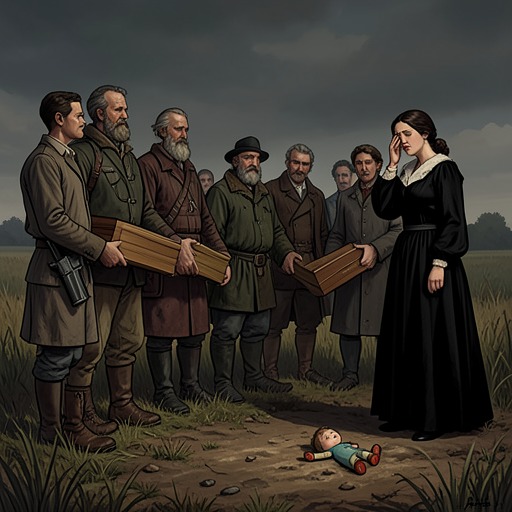
Yolanda’s distress later became visible in her repeated visits to the priest at Ainhoa. She insisted that her children were not in the tomb and that, as their mother, she could feel their absence. The priest understood the force of her grief but maintained that the children had been buried there; he had officiated at the funeral and seen coffins lowered into the grave. Her certainty was therefore treated against a seemingly authoritative memory of the burial, even as she continued to seek confirmation.
The Coffin and the Missing Remains
Photographs taken by Jonan Etxaide inside the family tomb at Ainhoa brought Haizea’s case back into focus. Among more than twenty-five images of the tomb and its coffins, Jonan had singled out a small metal coffin, overturned and open. Its initials were H. T. B., corresponding to Haizea Tremond Berrueta. The bag inside, initially assumed to contain her ashes, had a distinctive blue-and-red logo.
Jonan compared the visible corner of that bag with photographs of at least a dozen French food packages, including lentils, salt, flour, and sugar. The logo matched a one-kilogram sugar package. The supposed ashes in Haizea’s coffin were therefore sugar, not cremated remains. Yolanda’s father and the Oieregi funeral director both maintained that Haizea had not been cremated and that her body had been placed in the coffin, deepening the contradiction between the family’s account of the burial and what the grave contained.
Grief, Recognition, and Unresolved Loss
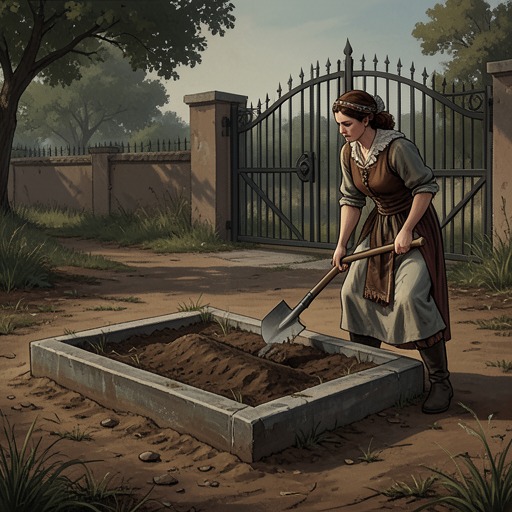
Yolanda had tried to open the tomb before the photographs established what was wrong. When she later acknowledged that medication had made her confuse the coffins, she nevertheless held to the central truth of her suspicion: Haizea’s body had been taken. She also recognized that stopping the proposed inspection would have left the girl’s absence undiscovered and made it easier to dismiss Yolanda as delusional. Her insistence that the children were missing thus became evidence rather than merely a symptom of grief.
The investigation confirms the substitution in Haizea’s coffin, but the evidence presented here does not establish where her body went or that it was recovered. Her story remains suspended between a death mourned for years and a disappearance that the family only belatedly had grounds to name.